Sourcing Guide · Hospitality Textiles
What Towels Do Hotels Actually Use? A Sourcing Guide for Buyers
“Hotel quality” is the most abused phrase in the towel industry. Here is what it actually means — in spec, in cost, and in compliance.

“Hotel quality” is the most abused phrase in the towel industry. Every brand uses it. Most of them can’t tell you what it means.
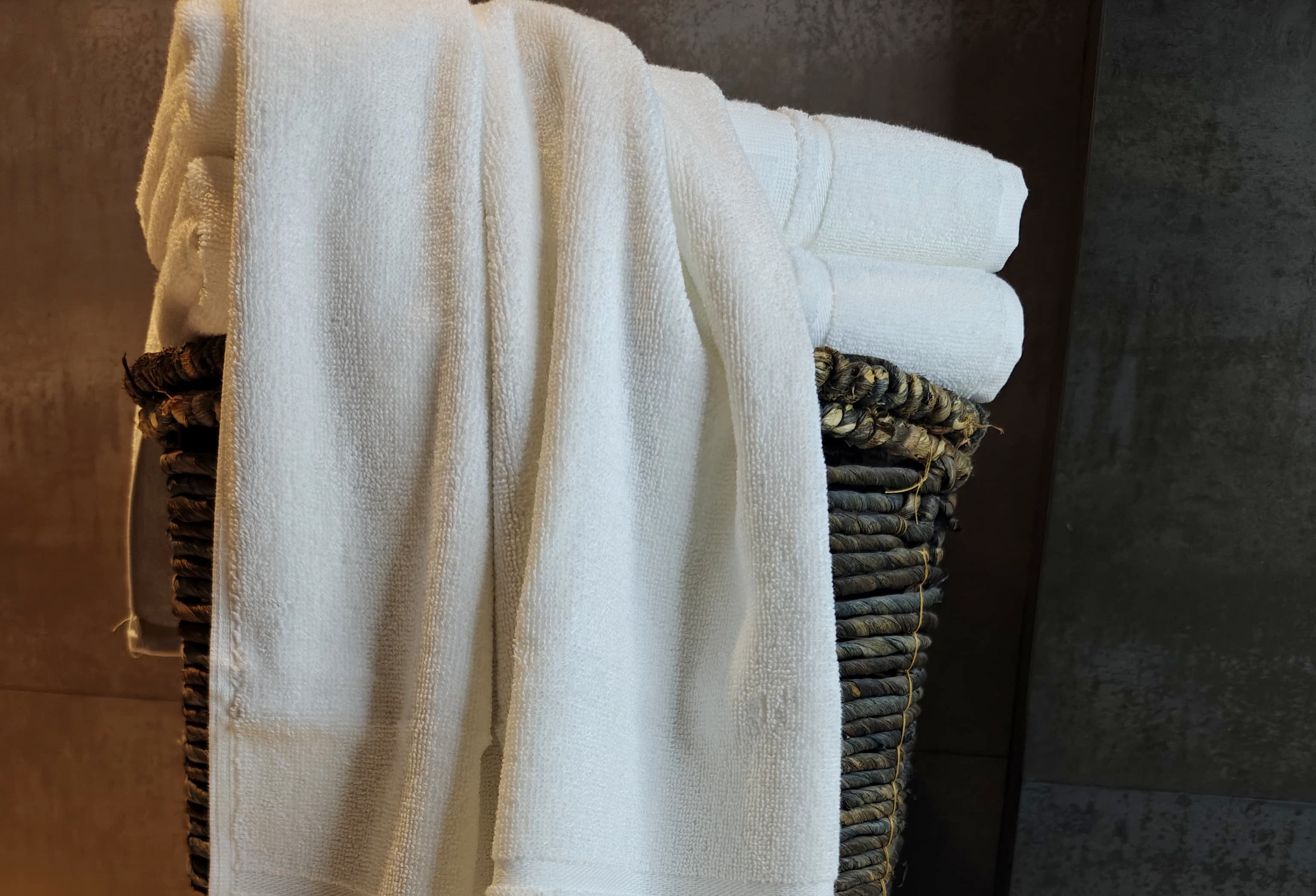
Here’s the short answer to the question in the title: most hotels use white, 100% cotton terry towels in the 450–650 GSM range, made with combed or ring-spun yarn. But that barely scratches the surface — and if you’re sourcing towels for a hotel, a distributor, or a private-label line, the surface is exactly where buyers lose money.
Because the towel in a hotel bathroom wasn’t designed to feel plush. It was designed to survive. Those are two completely different engineering briefs — and most of the market is built around the wrong one.
Key insights
- Hotel towels are engineered to survive 300–400 industrial wash cycles, not to feel plush on first touch.
- Standard hotels run 450–550 GSM; upscale 550–650; ultra-luxury 700+ — higher GSM means higher laundry cost, not automatically better.
- Two towels at the same GSM perform differently: yarn, ply and weave decide quality.
- Buyers should compare cost per wash cycle, not unit price — a durable towel is often far cheaper per use.
- Serious buyers screen on certification first: OEKO-TEX, ISO 9001, amfori BSCI and BCI each remove a different supply-chain risk.
01 — The briefWhat a hotel actually puts its towels through
A single hotel bath towel takes 300–400 industrial wash cycles before it’s retired — roughly 12–18 months of service. High temperature. Bleach, every time. Then a hydraulic press that compresses the towel into a dense tablet to force the water out.
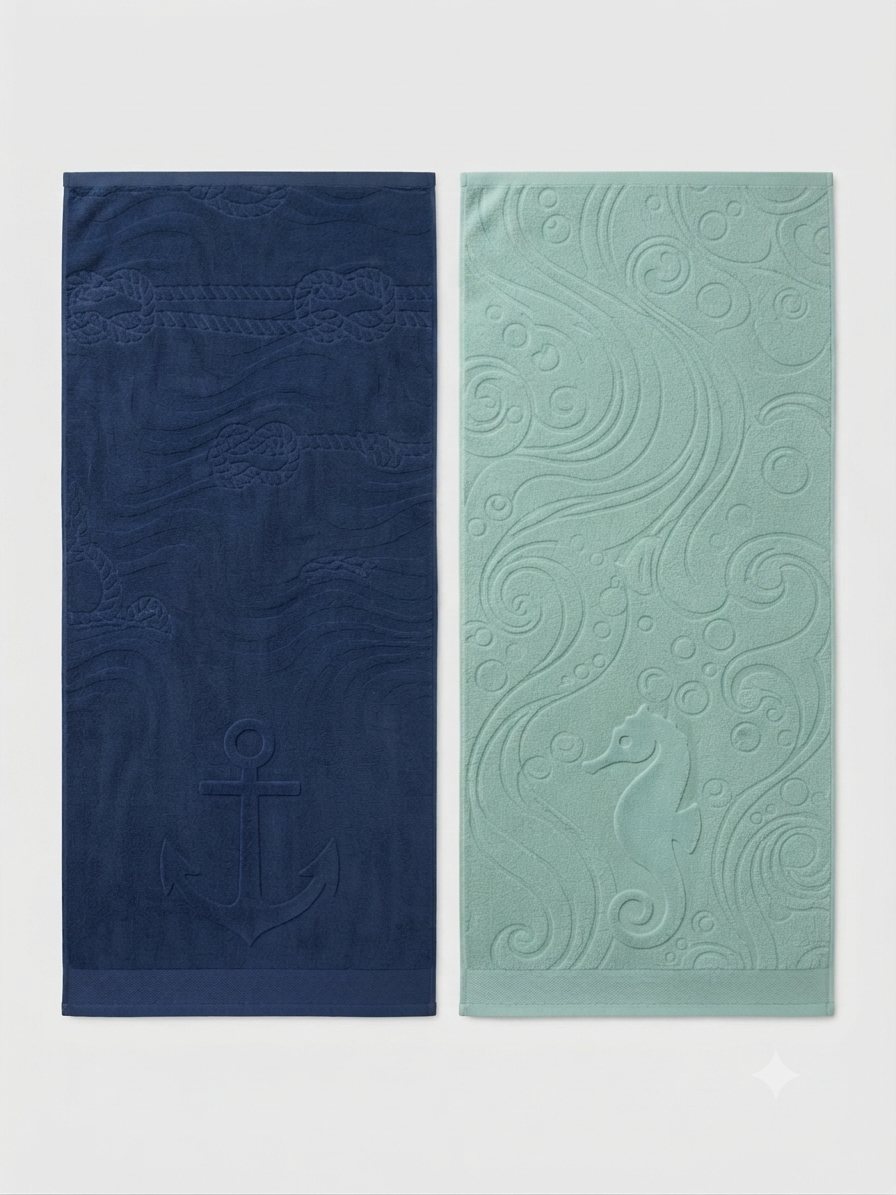
This is where cheaply made towels fail. A decorative border built to retail standards snags, puckers and frays under industrial laundering. But here’s the distinction most people miss: a properly woven dobby or jacquard border, engineered to hospitality spec, survives it perfectly — and that’s exactly how branded hotels get a logo or signature band woven into the towel. The problem was never the border. The problem is a retail-grade border being put through a commercial laundry.
Softness at wash one is irrelevant if the towel is pilling by wash twenty. Hotels know this. Most towel brands don’t.
02 — The specThe budget-to-luxury ladder
The gap between a forgettable hotel towel and a five-star one comes down to four technical factors. This is the ladder buyers should actually be reading:
Two towels can share an identical GSM and perform completely differently. GSM tells you how heavy a towel is. Yarn, ply and weave tell you how good it is.
03 — The scienceWhy hotel towels stay white and yours don’t
Your home towels turn yellow because body oils bind to cotton fibres at low wash temperatures and never fully release. They accumulate. They oxidise. That’s the yellow.
Hotel laundries run at temperatures and intensities that strip those oils completely — every cycle, with bleach. The towel resets to white every single time. It’s not the towel that’s different. It’s the process — and a towel engineered to withstand that process without falling apart.
04 — The economicsThe number that actually matters: cost per cycle
Here’s where most buyers get it wrong. They compare unit price. They should compare cost per use.
This is why “built to survive” isn’t a slogan. For anyone buying at volume, durability is the price. A cheaper towel that fails early — and reaches a guest looking worn — is the most expensive option on the table.
05 — The screenThe thing buyers check before anything else: certification
Specs matter, but serious hospitality buyers screen on compliance first — because a beautiful towel that fails an audit is worthless to them. Four certifications do the heavy lifting, and each answers a different question.

OEKO-TEX Standard 100
Is it safe against skin?Certifies no harmful dyes, formaldehyde or heavy metals. The baseline requirement for any towel in guest contact at quality properties.

ISO 9001
Will order #50 match order #1?Certifies a quality-management system — what underwrites consistency across repeat bulk orders.

amfori BSCI
Was it made ethically?Certifies audited social and labour standards — increasingly mandatory for EU and UK buyers with supply-chain obligations.

Better Cotton Initiative
Is the cotton responsibly sourced?Matters for brands and hotel groups with public sustainability commitments.
A supplier who can produce all four isn’t just selling you a towel — they’re removing risk from your supply chain. That’s worth more to a procurement team than an extra 50 GSM.
Tulip Towel Industries has manufactured to the specifications of international five-star properties — including Hilton, Sheraton, Trump Towers and Crowne Plaza — alongside the certification stack above.
06 — The openingWhat this means if you’re sourcing
Most products carrying a “hotel quality” label have never been built to a single one of these specs. They sell the feeling of a hotel — first-touch softness, thick pile, weight in the hand — not the engineering, the cost-per-cycle math, or the compliance behind it.
That gap, between the marketing and the spec, is the opening. Know what hotel quality actually means. Source to the spec. Ask suppliers the questions in this guide — GSM, yarn, ply, border construction, certifications, cost per cycle — and the serious manufacturers will have answers ready. The rest won’t.
The spec is available. Most brands just don’t know what it is.
Frequently asked questions
What GSM do hotels use for bath towels?
Standard hotels typically use 450–550 GSM, upscale properties 550–650 GSM, and ultra-luxury or spa towels 700 GSM and above. Higher GSM increases absorbency and perceived luxury but also raises laundry cost and drying time, so the right weight depends on the property tier and laundry operation.
Why are hotel towels always white?
White towels can be bleached and washed at high temperatures every cycle, which strips body oils and keeps them looking clean and fresh. White also signals cleanliness to guests and is easy to replace and match across a property.
What makes a hotel towel different from a home towel?
Hotel towels are engineered for durability under industrial laundering, not first-touch plushness. They use denser bases, shorter and tighter pile, two-ply combed or ring-spun yarn, and reinforced hems, so they survive 300–400 wash cycles without pilling or thinning.
Do hotel towels have borders?
Many do. A properly woven dobby or jacquard border, made to hospitality specification, survives commercial laundering and is how branded hotels add a logo or signature band. Only cheap, retail-grade borders fray under industrial washing.
What certifications should a hotel towel supplier have?
Look for OEKO-TEX Standard 100 (product safety), ISO 9001 (quality consistency), amfori BSCI (ethical manufacturing) and Better Cotton Initiative (responsible cotton sourcing). Together they reduce product, quality, compliance and sustainability risk across the supply chain.
How should buyers compare towel prices?
Compare cost per wash cycle, not unit price. A towel that costs more but survives many more washes is usually far cheaper per use — and avoids the hidden cost of worn towels reaching guests.
Built to the spec, not the slogan
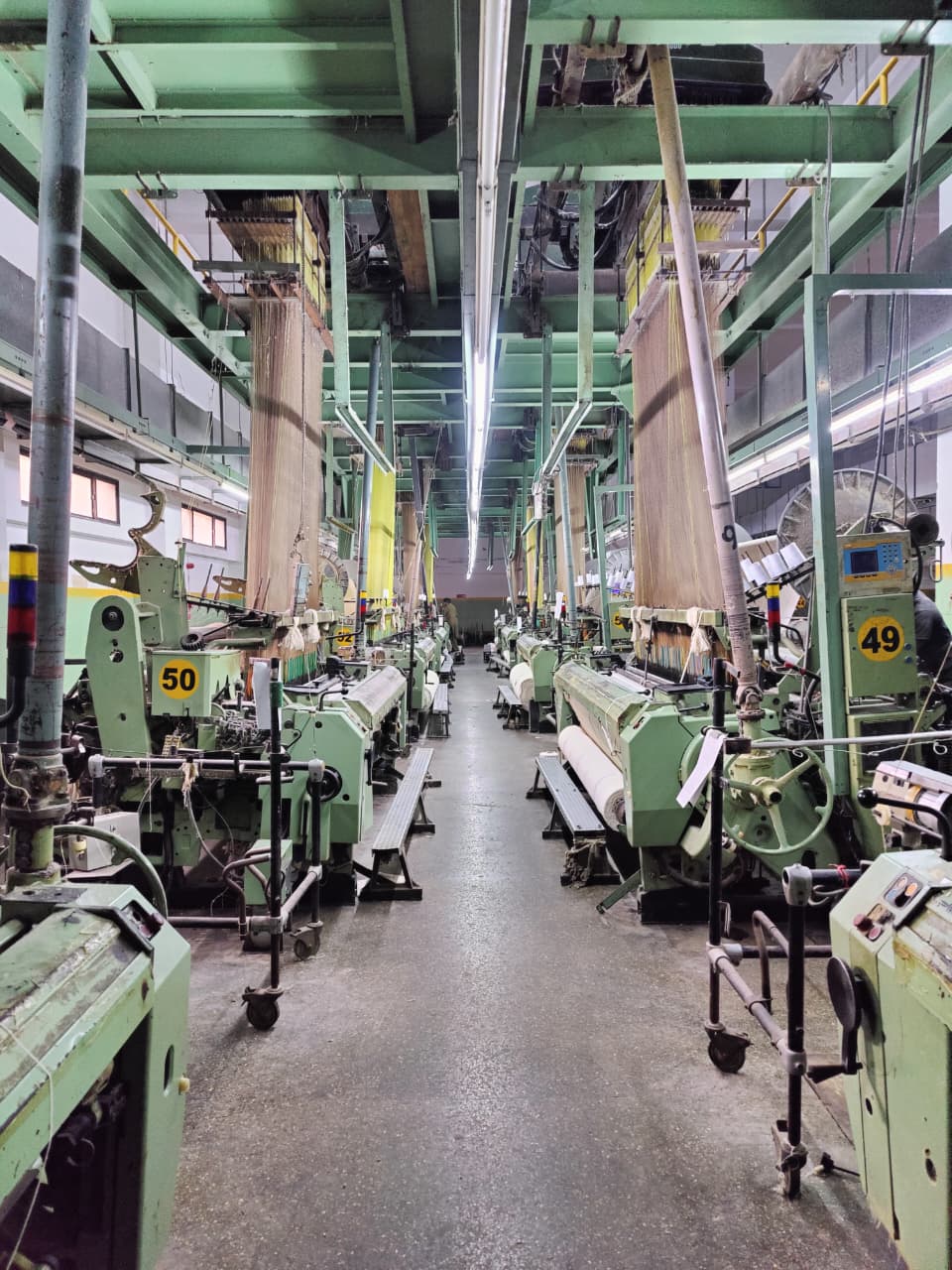
Tulip Towel Industries is a vertically integrated terry towel manufacturer in Karachi, Pakistan — spinning to finishing in-house, exporting hotel, spa, retail and private-label towels since 1998.
A-39/B, S.I.T.E., Karachi 75700, Sindh, Pakistan · +92 308 2258639 · [email protected]