You clicked through for the real answer. Here it is — no hedging.
Part one covered the basics: GSM is density, not net weight. This is the part that should happen before you confirm a price — not after the container lands.
There are two ways to measure a towel's GSM. They sound alike. On a towel, they aren't.
Method 1 — Piece weight (the standard)
Weigh the whole finished towel, back-calculate the density across its full area:
Method 2 — Punch weight (what some buyers ask for)
Instead of the whole towel, the inspector punches a 1 sqm cutout from the body and weighs only that.
On flat fabric — a bedsheet — both methods agree. The weight's even, so a punch from anywhere represents the whole.
A towel is not even. That's the whole problem.
A towel is not evenly weighted
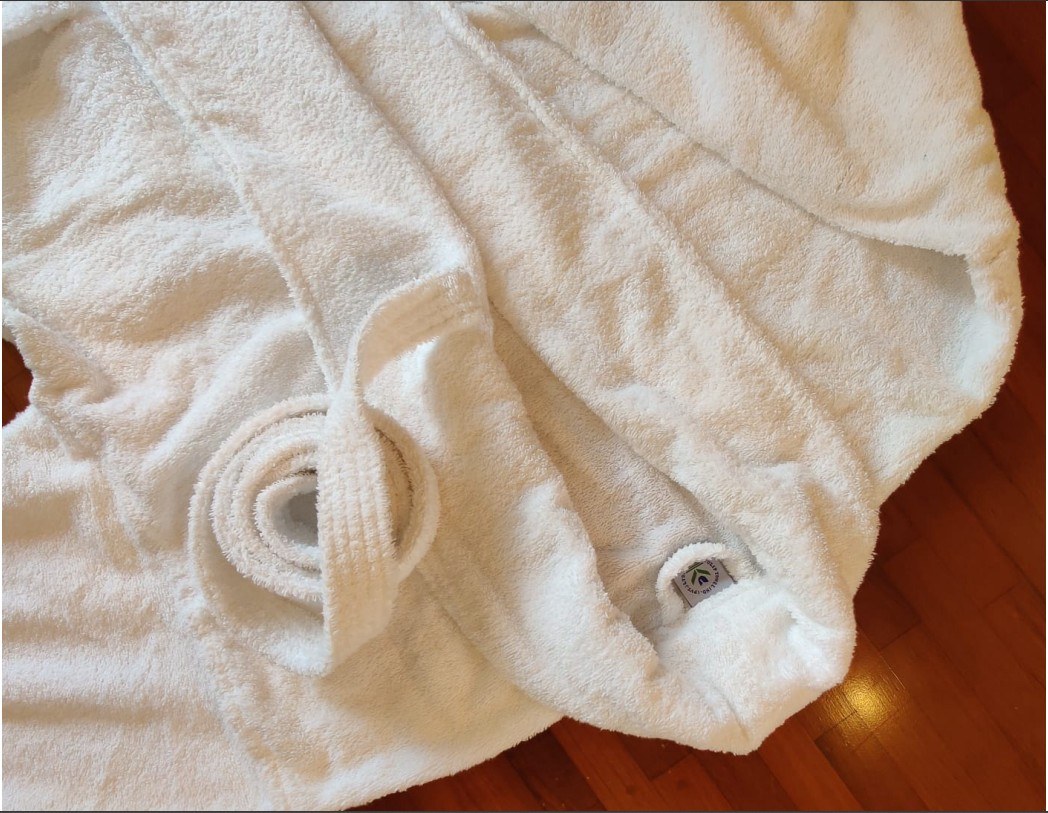
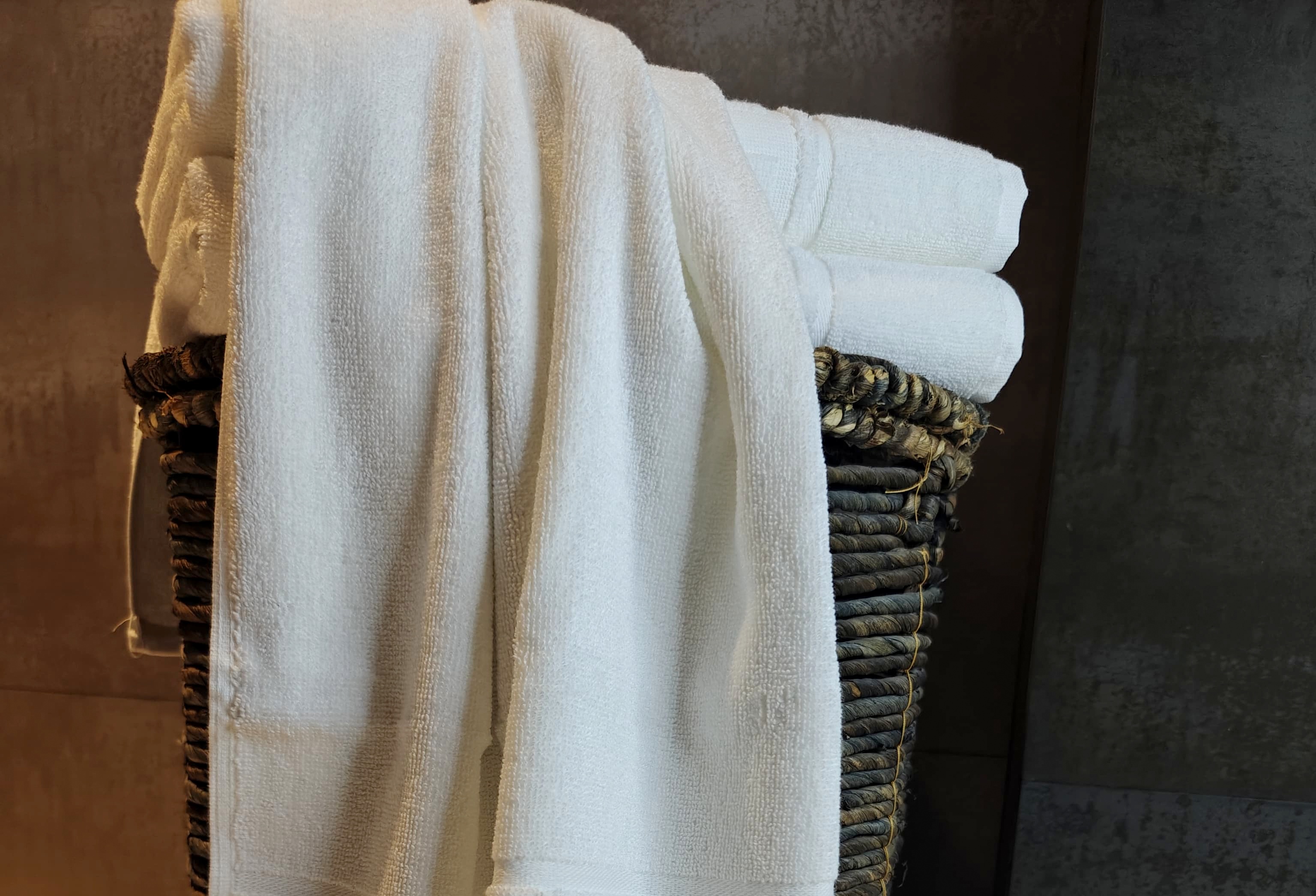
A towel has zones, and they don't weigh the same:
| Zone | What it is | Relative Density |
|---|---|---|
| The hems | Top and bottom edges — tight plain weave, no loops | Denser than the body |
| The dobby/jacquard border | If there is one | Denser still |
| The body | The big looped field in the middle | The lightest part |
Now look again at how punch weight works: the inspector samples the body — the lightest zone. Piece weight averages the whole towel, heavy borders included.
"Same towel. Two numbers."
The trade-off nobody explains
Here's what follows directly — and it changes how a towel should be designed.
The heavier the border, the lighter the body.
For a fixed total weight, every gram in a dense decorative border is a gram stolen from the looped field in the middle — the part you actually touch and dry with.
So for lightweight towels, a lightweight border matters. Load a 380 GSM towel with a heavy jacquard border and you starve the body. The spec number looks fine; the towel feels thin where it counts.
Good engineering is about where you spend the weight, not just how much.
The 4–7% nobody puts in writing
Now the number we promised.
When a buyer requires punch weight on a bath towel, the body has to hit target density on its own — because that's what gets punched. But the body is the lightest zone. So the mill has to add ~4–5% extra weight to the whole towel just to make the punched sample read right.
Hand towels? Often 7% or higher — smaller size, bigger border-to-body ratio.
Real yarn and real cost. It rarely shows up as a line on a quote. It's either quietly baked into the price — or quietly missing, if the mill didn't account for how you'll inspect.
That's the weight most mills would rather not discuss. Now you know it's there.
What to actually do
One thing:
"Before you confirm, ask whether the quote is piece weight or punch weight — and tell them which way you'll inspect."
Quote on piece weight, inspect by punch, and a perfectly correct towel reads "underweight." Instant dispute nobody needed.
Compare a piece-weight quote against a punch-weight quote as if they're the same number, and you're not comparing the same product. The "cheaper" one might just be measured differently.
Frequently asked questions
How Tulip Towel handles this
We state the method every time. Not because one beats the other — piece weight is the standard and what we build on — but because you can only compare fairly, and get the towel you specced, if you know which ruler everyone's using.
Ask the question. The answer tells you who you're dealing with.
Start a conversation about your program
100% cotton terry towels, priced on piece weight, not punch weight. We engineer to your target price, and we tell you exactly how we measure.
Email Us →